
Korea is a country with a rich and vibrant cultural heritage. From music and art to literature and dance, there is much to enjoy about Korean culture. The country is also greatly influenced by the Chinese and Japanese cultures, which can be seen in the Confucianism that has established many traditions in Korea.
The once-dominant Confucian culture continues to influence Korean families, work, and social interactions today. When visiting Korea, be sure to take your shoes off at the door as a sign of respect.
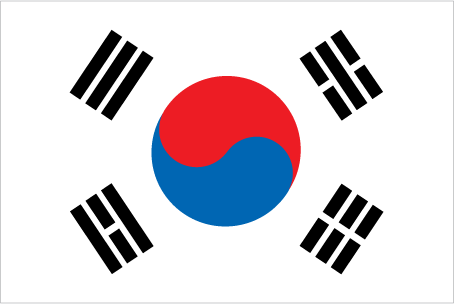
The History of Korea
The history of the Korean nation began in Manchuria and the Korean Peninsula when people started settling there 700,000 years ago. Korea has a rich cultural heritage that offers a delightful combination of tradition and modernity.
The early inhabitants of the peninsula were influenced by Chinese culture, but over time they developed their own unique customs and traditions. Today, Koreans share a common culture, but there is still a sense of regionalism between northerners and southerners.
The Korean Language
Korean is a fascinating language that is part of the Altaic language family, which includes Turkish, Mongolian, and Japanese. It is estimated that there are 80 million Korean speakers worldwide, making it the 14th most spoken language in the world. The Korean alphabet, known as Hangul, was developed in the 15th century and is unique among alphabets in that it is phonetic, meaning that each character corresponds to a sound. This makes it relatively easy to learn Hangul compared to other languages with more complex writing systems.
Korea has a rich cultural heritage spanning music, art, literature, dance, architecture, clothing, and cuisine. Confucianism has also had a significant impact on Korean culture and traditions. Koreans are proud of their culture and are quick to share it with others. In recent years, Korean popular culture has taken the world by storm, with K-pop and K-drama becoming hugely popular internationally. This increased interest in
Religion in Korea
Korea is a country with a rich cultural heritage. The influences of Confucianism, Buddhism, and Daoism can be seen in many aspects of Korean life. Family is the most important part of Korean society, and the father is the head of the household. In South Korea, 46% of the people do not have religious affiliations. There are 23% Buddhists, 29% Christians, and 2% believe in other cultures. South Korea supports religious freedom and offers a delightful combination of tradition and modernity.
Family Structure in Korea
The family is the basic component of social life in Korea, and its perpetuation has been of paramount importance under patriarchal Confucianism. Like all agricultural societies, Korean life has always centered on tightly knit families.
Large families have been prized and over many centuries families have functioned as economic units. Arranged marriages are common and extended families are still important even in the urbanized society of today.
This family-centrism has been the underlying focus of a large number of Korean anthropological studies, covering “education fever,” extended family support systems, and the role of women within the family structure.
Confucian philosophy defined the traditional Korean family structure which placed family harmony over individual happiness. By emphasizing the importance of filial piety, many Koreans believed that proper decorum among family members was essential for a harmonious home.
Mothers traditionally were responsible for the education and socialization of their children and still play an important role in Korean families.
Comments
Post a Comment